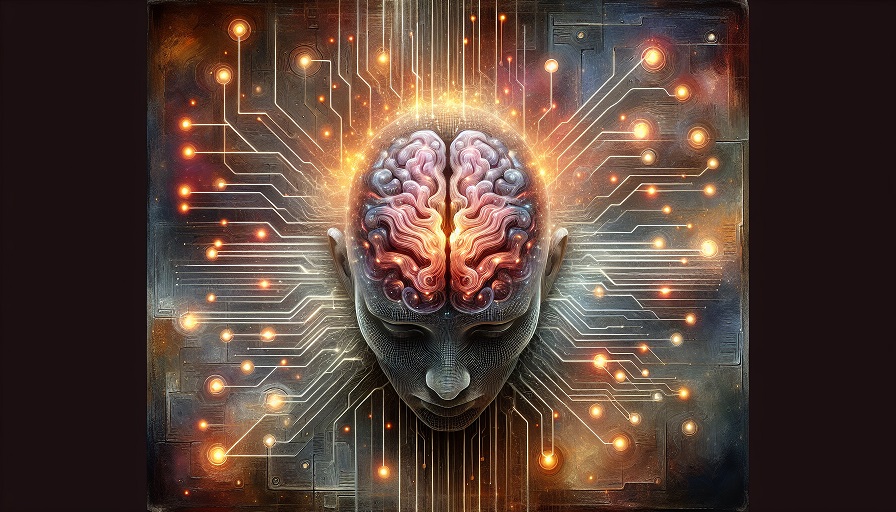
Creativity is often described as humanity’s crown jewel – the spark of originality that separates us from algorithms. Yet, paradoxically, AI is quickly becoming one of the most useful tools for amplifying that same creative spark. The real opportunity isn’t to pit humans against machines but to figure out how human creativity and AI assistance can work together. Done right, this partnership produces results that neither could achieve alone. Here we look at the science, strategies, and step-by-step practices that let you blend human originality with AI’s unique strengths.
Why AI Alone Isn’t Creative
AI doesn’t “create” in the human sense. It doesn’t feel curiosity, joy, or inspiration. Instead, it recombines patterns from vast data sets. That recombination can look creative, but it lacks intention. Human creativity, by contrast, emerges from lived experience, emotion, and the ability to make meaning. When you combine the two, AI acts as an accelerator while humans supply purpose, direction, and storytelling depth.
How Humans and AI Complement Each Other
- AI’s strengths: speed, scale, pattern recognition, endless iteration.
- Human strengths: emotion, intuition, value judgment, originality of experience.
Think of it like jazz: AI lays down the rhythm with infinite variations, and humans improvise on top, shaping the melody.
Framework: The Creative Fusion Model
To combine creativity with AI assistance, you can use a four-step model:
- Frame: Define the problem or question with context and constraints.
- Generate: Let AI produce raw material – ideas, drafts, images, or soundscapes.
- Curate: Select the most promising results and discard the weak ones.
- Transform: Infuse results with human insight, emotion, and originality.
This process ensures AI is a tool, not a crutch.
Practical Strategies for Creative Collaboration with AI
1. Use AI as a Brainstorming Partner
Instead of asking for finished products, ask for lists of ideas, unexpected angles, or alternative takes. Treat it like a colleague in a brainstorming session.
2. Iterate with Constraints
Constraints fuel creativity. Ask AI to generate solutions under specific rules – like “write a poem in the style of a business memo” or “design a logo using only circles.” This forces novelty.
3. Leverage AI for Divergence, Humans for Convergence
AI excels at divergent thinking – producing dozens of variations quickly. Humans excel at convergent thinking – evaluating which variations align with goals. Alternate between the two modes for balance.
4. Build Rituals Around AI Sessions
For example: start with a 5-minute sketch of your own ideas, then ask AI to expand them. End with a 10-minute reflection on what resonated and what didn’t. Rituals keep humans in the driver’s seat.
Case Studies of Human + AI Creativity
The Designer
A graphic designer uses AI image generators to produce 50 concept variations overnight. They don’t adopt any image wholesale but remix elements into a final design with a distinct personal style.
The Writer
An author stuck with writer’s block asks AI to propose 10 alternative plot twists. One suggestion sparks a completely new story arc. The creativity came from the human, but AI provided the nudge.
The Musician
A songwriter generates AI-created melodies, then layers human lyrics and emotion. The result is a hybrid track that feels fresh yet emotionally grounded.
Exercises to Train Creative Collaboration
Exercise 1: Prompt Expansion
Write a short creative prompt, then ask AI to generate three variations. Compare, adapt, and rewrite. This builds flexibility.
Exercise 2: Constraint Remix
Ask AI to create within odd rules: “Describe freedom in 20 words, no adjectives.” Human editing turns strangeness into art.
Exercise 3: The 5×5 Challenge
Run 5 prompts, each generating 5 outputs. Pick one element from each set and combine them into a hybrid creation.
Exercise 4: Humanization Pass
Take an AI draft and rewrite it with sensory detail, humor, or metaphor. This ensures your voice shines through.
Barriers to Creative Fusion
- Overreliance: Letting AI outputs dominate, losing originality.
- Underutilization: Using AI too timidly, missing opportunities.
- Perfectionism: Expecting AI to deliver flawless results on the first try.
Overcoming these requires balance: AI as a tool, humans as the creators of meaning.
Metrics for Measuring Success
- Diversity of outputs: How many unique ideas does AI help generate?
- Originality score: How much of the final product reflects your own perspective?
- Efficiency gain: Did AI reduce the time to produce high-quality creative work?
A Daily Routine for Blending Human and AI Creativity
- Warm-up: 5 minutes of personal brainstorming.
- Divergence: 15 minutes of AI idea generation.
- Convergence: 15 minutes of human selection and refinement.
- Reflection: 5 minutes of noting what AI did well and where human originality added value.
Combining human creativity with AI assistance is not about replacing artistry but amplifying it. AI supplies variation, speed, and inspiration; humans supply context, meaning, and originality. When used as a partner rather than a crutch, AI becomes a creativity multiplier – helping you think bigger, work faster, and stay original in a world where automation alone is never enough.